

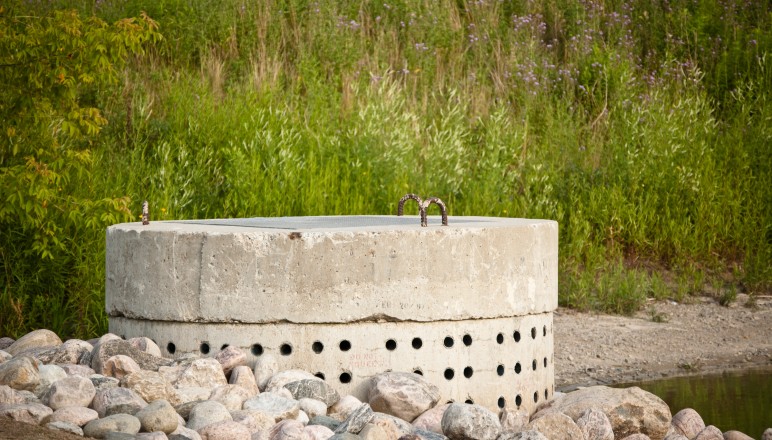
To some, it’s a four-letter word for something that costs money and takes up space. To others, it’s a way to help reduce our impacts on the environment, and restore hydrologic cycles. To everyone, it’s something that needs to be thought through, worked out, and designed before getting plan approval and starting construction.
Until August 2014, it was enough to attenuate stormwater flows through the construction of ponds with outlet control structures, and treat the stormwater quality through forebays or separator structures. On constrained sites with high land value, underground tanks often replace the ponds to allow for more buildable site area.
In August 2014, the stormwater world changed in Washtenaw County. New stormwater regulations put into place across the County require nearly all of the rainfall on a site to be infiltrated into the ground, or otherwise used on-site. This is easy enough to do on a site with sandy soils. A simple infiltration basin can be constructed which will absorb water into the ground, or underground gravel beds combined with pipes and chambers can distribute stormwater across greater areas.
But this doesn’t work very well on sites with heavy clay soils, high groundwater tables, or contaminated soils. Larger multi-story buildings can capture stormwater and efficiently use it for non-drinking uses like toilet flushing and cooling towers, but smaller buildings with less demand present more of a challenge. The first thought is harvesting water for irrigation, but irrigation demands are low in Michigan and don’t make much of a dent in the stormwater volume collected, and generally the time frames when water is collected, and when irrigation is needed can be months apart, making storage cost-prohibitive.
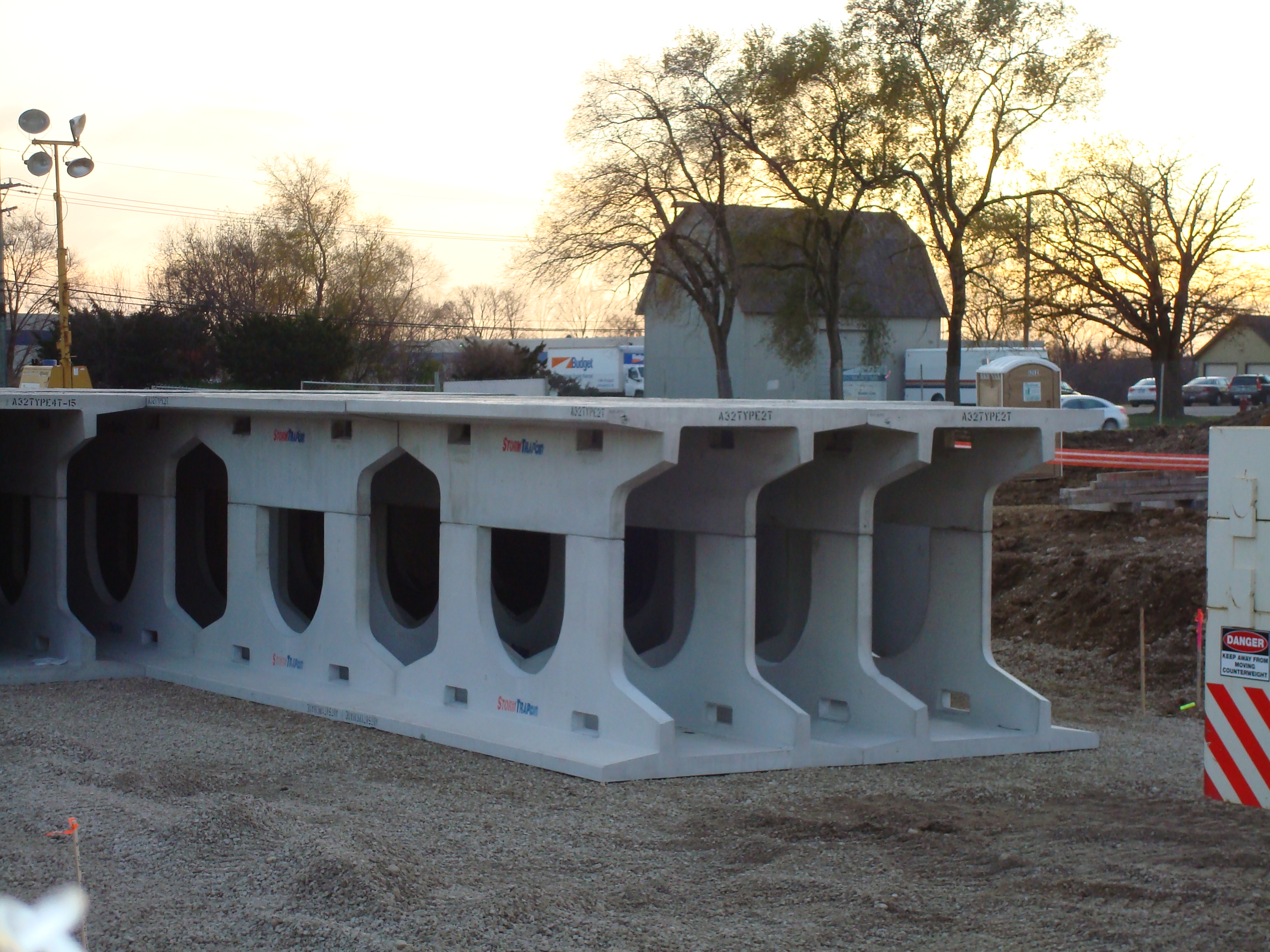
At present, we’re working with the City of Ann Arbor and Washtenaw County to develop options superficially similar to infiltration basins, that are being designed to capture the first inch of runoff in a sandy soil layer, and allow the vegetation in the basin to absorb the water through its roots and evapotranspirate the water through biological processes, so that the water will not be released from the site. Additional rainfall beyond the first inch will filter through the sandy soils for extra treatment and removal of contaminants before being collected in perforated underdrain pipes and being released into off-site swales or pipes. Although some runoff would still be released from the site, the overall volume and flow rates will still be reduced below that of a pre-developed woodlot. We have received interest from City and County officials for pursuing this option, but we are still currently working out the details. We will be sure to post here when the plans are approved and the system is constructed.
At Midwestern Consulting we work to find solutions for our clients, to get projects designed, permitted, and constructed in ways that minimize costs while maximizing the development of client goals. We have provided our expertise for numerous private, municipal, and institutional clients across the region, and would be glad to discuss potential opportunities with you. Don’t hesitate to give us a call or an e-mail to discuss how we can help you on your next great project.
Jeremy Matthei, PE
Civil Engineer
Midwestern Consulting